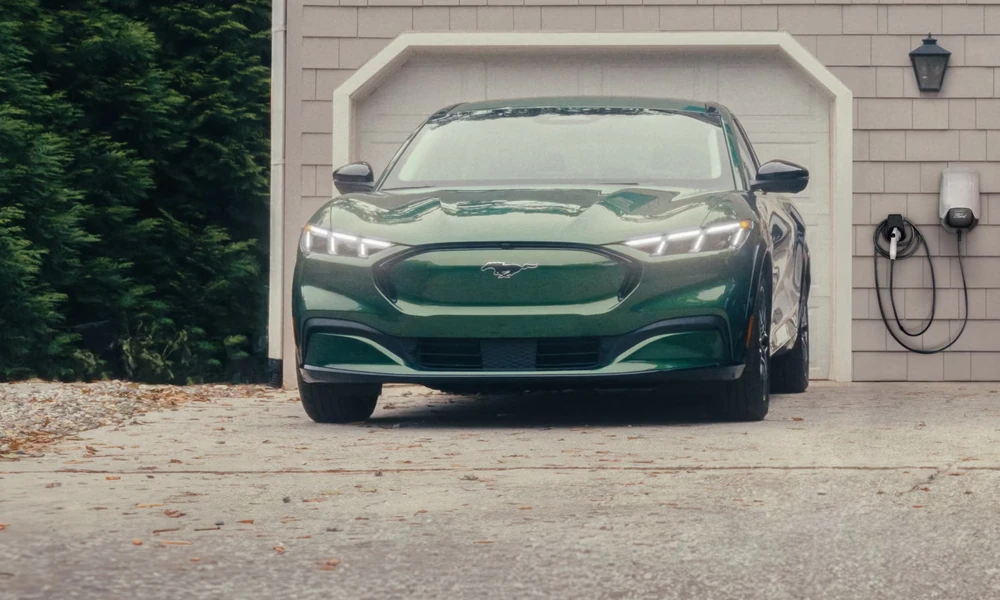

Most people spend more time picking a sandwich than picking the trim level on a $45,000 electric car. I know because I did it. I once drove two hours to look at a Mach-E listed as “Premium” and found out on arrival that the premium part referred to the paint protection package. That trip taught me a hard lesson about browsing electric inventory online, so here it is: the listing is a document, and it rewards people who read it like one.
The good news is that you don’t need a salesperson whispering features at you to figure this out. You need to know which fields matter, which ones are marketing noise, and what to confirm before you hand over a deposit. If you’re searching the Ford EV Inventory at Visalia Ford, that filterable list already gives you color, stock number, VIN, and trim in one place. The trick is knowing how to use those columns instead of scrolling past them.
Below is the method I use now. It’s a five-field scan I call the Lot Read: stock number, VIN, trim, battery and range, then dealer tools. Run it in order, and you’ll skip the wasted drives.
Start With the Stock Number, Not the Photo
The photo is there to make you feel something. The stock number is there to make you act. Every vehicle on a dealer lot carries an internal stock number, and it’s usually the fastest way to get a straight answer from anyone who works there. Call the sales line, read off the stock number, and ask whether the car is physically on the lot today, in transit, or spoken for by another customer.
Here’s the part I’d push back on: a listing showing “available” doesn’t always mean “sitting under the sun in Visalia.” Vehicles in transit get listed all the time. That’s not shady, it’s just inventory software doing its thing before the truck arrives. But you deserve to know which one you’re looking at before you clear your Saturday.
Ask three things when you call:
- Is this stock number on the ground right now, or still in transit?
- Has anyone placed a deposit on it?
- Can you send me photos of the actual vehicle, not the stock manufacturer image?
If the answer to the first question is “in transit,” ask for the expected arrival window and whether they’ll hold it. Get that in writing, even if it’s a text message. A text with a date is worth more than a cheerful promise on a phone call.
Decode the VIN Before You Fall for the Trim Name
A VIN is 17 characters of free information, and almost nobody reads it. Trim names are set by marketing departments. The VIN is set by the factory. When they disagree, trust the VIN.
The tenth character tells you the model year, and the characters further in identify the plant, the engine or drive unit, and the body style. You don’t need to memorize the whole cipher. You just need to know that the VIN on the listing should match the VIN on the window sticker and the paperwork you sign. I’ve caught a mismatched year code on a used listing before, and the dealer corrected it without argument because the VIN doesn’t lie.
This matters more on certified pre-owned EVs than on new ones, because a used car can carry a trim badge from a previous owner’s taste in stickers. Pop the VIN into a decoder, compare it to the listing, and move on. Two minutes, no drama.
What the Battery Specs Actually Tell You
Range is the number everyone fixates on and the one that varies most with how you drive. A Mach-E rated for a certain range will deliver close to that on a mild Central Valley morning and noticeably less in triple-digit heat with the air conditioning working hard. That’s true of every EV, not a knock on any one brand.
If you want an independent reference point rather than a dealer’s summary, the U.S. Department of Energy publishes official range and efficiency figures by model year. Compare the listing’s stated range against the federal figure for that exact trim and year. If they don’t line up, you’ve found either a mistake or a creative description, and either one is worth a question.
For used EVs, ask for a battery health report or state of health reading. Most dealers can pull one. If they can’t, that’s your answer about how seriously they handle electric inventory.
Charging at Home Is the Part Nobody Explains
Before you commit to any EV, answer one unglamorous question: where will it charge overnight? A standard household outlet will trickle charge slowly enough to test your patience. A dedicated Level 2 setup at home is what most owners end up wanting, and installation cost depends on your panel and where you want the unit mounted.
The Alternative Fuels Data Center keeps a national locator of public charging stations and plain-language guidance on home charging equipment. Use it to check what’s near your house and along your regular commute to Fresno or Bakersfield. Public fast charging on a road trip is fine. Relying on it every week gets old fast.
| Question | Why it matters | Where to confirm |
|---|---|---|
| Is the car physically on the lot? | Prevents a wasted trip | Stock number, by phone |
| Does the VIN match the listed trim and year? | Catches mislabeled used units | VIN decoder |
| What’s the official range for this trim? | Gives you a neutral baseline | Federal fuel economy data |
| How will you charge at home? | Decides daily ownership comfort | Your electrician, charger locator |
| Are incentives applied to the listed price? | Changes your real out-the-door number | Dealer finance office |
The Finance Conversation, Handled Early
Price on a listing is a starting point, not a finish line. Tax, registration, and any add-ons land on top, and federal or state EV incentives may or may not already be baked into the number you see. Ask the finance office to walk you through the out-the-door figure line by line before you get emotionally attached to a particular car.
The Federal Trade Commission publishes plain guidance on car buying and dealer add-ons, and it’s worth ten minutes of your evening. Knowing which add-ons are optional puts you in a much calmer position at the desk. My rule: if I can’t explain an add-on to a friend in one sentence, I don’t sign for it.
A Five-Minute Checklist You Can Run Tonight
Open the inventory list, pick two or three candidates, and run this in order. Jot answers next to each name so you’re comparing facts instead of vibes.
- Write down the stock number and VIN for each candidate.
- Decode each VIN and confirm year, trim, and drivetrain.
- Look up the federal range figure for that exact trim.
- Check home charging options and one public station near your commute.
- Call and ask if the vehicle is on the ground, plus the out-the-door estimate.
Whoever answers those five cleanly earns a test drive. Whoever dodges them doesn’t. That’s the whole system, and it works whether you’re shopping in Visalia or anywhere else in the valley.
One Last Thing Before You Go
Electric shopping gets easier the moment you stop treating the listing as an advertisement and start treating it as a spec sheet. Read the stock number, trust the VIN over the badge, verify range against a neutral source, and settle the charging question before you sign anything. Do that and the dealership visit becomes a formality instead of an ambush.
So which candidate are you running through the checklist first, and what did the stock number tell you when you called?